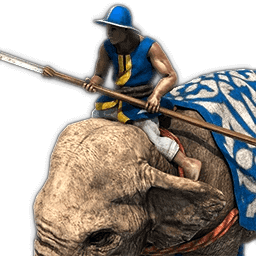
Elefante de Batalla
Slow but durable Cavalry.
Coste


Combate
Entrega
Valores base antes de tecnologías y mejoras; en una partida avanzada suelen ser mayores.
Línea de evolución
- Elefante de Batallade los Castillos
- Elefante de Batalla ÉliteImperial
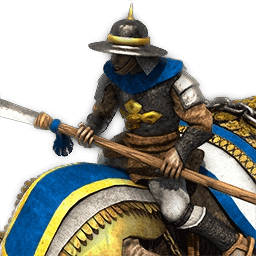
Elefante de Batalla es fuerte contra
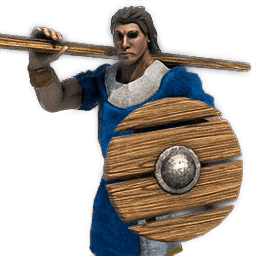
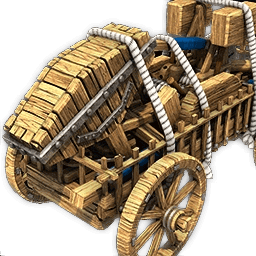
Elefante de Batalla es débil contra

Conocimiento
Bonificaciones de ataque
Clases de armadura
Determina qué bonificaciones de ataque le afectan.
Civilizaciones
Disponible en 6 civilizaciones.
Mejoras clave
Edad Feudal
- Bloodlines
+20 HP for mounted units
Edad de los Castillos
- Husbandry
+10% Speed for mounted units
Tácticas
Battle Elephants are an exceptionally powerful and expensive unit, but are balanced with even more exceptional weaknesses. In terms of strengths, Battle Elephants have exceedingly good stats; with high hit points, damage, and trample damage, they can beat almost any melee unit cost-effectively, especially in the early Castle Age. In addition, they are produced in only 24 seconds from Stables. A single Stable can produce 280% the hit points via Battle Elephants as opposed to Knights, allowing a defending player to significantly outproduce an attacker, even with limited production buildings. Due to the combination of these factors, Battle Elephants can be swapped into remarkably quickly if necessary, either for defense, or a surprise attack from a sneaky Stable. However, Battle Elephants have even more potent weaknesses. They are very slow, making them unable to force engagements and leaving them to take unfavorable fights. They tend to benefit less from the same upgrades compared to other units, resulting in their power dropping much more rapidly as the game progresses. For example, Knights gain 20% hit points from Bloodlines, while Battle Elephants gain just 8%. They also take double damage from Spearmen, and due to their high cost and power, make exceedingly tempting targets for Monks, which is further worsened by elephant civilizations' near-universal lack of Heresy. Due to these many weaknesses, Knights are often preferred when available, at least for more general use in the Castle Age. Exceptions are certain particular situations, or civilizations with very powerful bonuses, such as the Malay. One major situation where Battle Elephants tend to be better than Knights is where a player is rushing out an army, as they have a lower training time and have a higher cost/unit (except for the Malay). This means a player can convert resources into units much more quickly. Additionally, the slow speed of the Battle Elephant is much less of a downside when they are created or ungarrisoned much closer to enemy units and buildings. Common cases where rushing out units as fast as possible is especially important are when making forward buildings, sneaking Villagers before walls come up, when defending from heavy aggression, and in landings on water maps. Each civilization has their own potent bonuses for their Battle Elephants: === === Bengali Battle Elephants take -25% bonus damage, are more resistant to conversion, and attack 20% faster with Paiks. As such, Pikemen and Monks are less effective. They are also more effective in melee combat and taking down buildings. Since Bengali Elephants are more resilient against their counters, Bengalis are more encouraged to rush with them. However, since the Bengalis have very confined tactics due to a lacking military tree, the elephant rush (with Battle Elephants and/or Elephant Archers) and Ratha rush are the only two effective military choices for the Bengalis in the Castle Age. It is possible for the Bengalis to launch a triple elephant attack with the Armored Elephant, Battle Elephant, and Elephant Archer, though this is mostly seen in the very late game due to the high cost. === === Burmese Battle Elephants have armor since Dynasties of India. Both Burmese unique technologies benefit their Battle Elephants, also: Howdah gives them armor (for a total of armor in combination with their civilization bonus) and Manipur Cavalry gives +4 attack bonus against . Burmese Battle Elephants are a strong option against archers, while being respectable against melee units as well. A Crossbowman only deals 2 damage per hit to a Burmese Battle Elephant if both players have all Castle Age Blacksmith technologies researched. The Burmese Battle Elephant can kill Crossbowmen with only 3 hits when Manipur Cavalry is researched, even without any Blacksmith attack technologies researched. They can kill generic Crossbowmen with 2 hits when fully upgraded if the Crossbowmen lack any armor upgrades. Since the Burmese have no concrete answer to ranged units due to their abysmal Elite Skirmishers and lacking any other anti-archer unit, their Battle Elephants may serve a delay and protect their commonly-used unit, the Arambai. === === Finding the optimal use for Dravidian Battle Elephants can be tricky. While they lack Bloodlines, Plate Barding Armor, and the Elite Battle Elephant upgrade, they have Medical Corps, which allows them to regenerate 30 hit points per minute, and Wootz Steel, which enables them to ignore enemy armor. With so many missing and unique upgrades, this makes them a particularly difficult unit to judge intuitively. In the Castle Age, while they have less hit points, their regeneration can more than make up the difference, often regenerating more than 20 hit points in a given fight, as well as healing between fights, which can make them surprisingly potent in a defensive role. Even in the Imperial Age, they can trade cost-effectively with standard Paladins after Wootz Steel has been researched, and offer superior performance to Champions in that role, though not better than Halberdiers. However, they are less durable than every other civilization's Elite Battle Elephants, and while they can still work in niche cases, they should be used judiciously. === === Khmer Battle Elephants move 10% faster and get +3 attack with Tusk Swords. This probably makes the Khmer Battle Elephants the most well-rounded, being good against melee units and buildings due to the latter, and foot archers due to the former. Since Tusk Swords is already available in the Castle Age, Battle Elephants can reach 17 attack, a value that makes their Battle Elephants very dangerous offensive tools. It is possible for the Khmer to perform a "Battle Elephant rush". Thanks to the Khmer good food economy, civilization bonus, and unique technology, they have the strongest Battle Elephants throughout the game. The Khmer can also use their excellent Scorpions to aid their Battle Elephants against most units. === === The Malay have cheaper Battle Elephants, costing -25% in the Castle Age () and -35% in the Imperial Age (). This, combined with their civilization bonus that makes them Age up with relative ease, enables them to get the Battle Elephants out on the field astonishingly quickly. Combined with archers to deal with Pikemen and Monks, an early Castle Age visit of a dozen of them can prove very unpleasant to an ill-prepared town. Later on, they become much less dangerous, lacking Chain Barding Armor. The lack of Bloodlines is also inconvenient, but much less significant. As they become even cheaper in the Imperial Age, they are still ready to be used against melee units, especially considering that the Malay are the only civilization with Battle Elephants who have access to Heresy. The Malay can also perform a Battle Elephant rush, but cannot sustain it due to missing upgrades and a lack of economic bonuses. However, Malay Battle Elephants have more resistance against ranged attack than Cavaliers, for a lower cost. The Malay can therefore utilize them as their own meatshield. Fully upgraded, Malay Elite Battle Elephants and Elite Boyars have the same survivability against Arbalesters. The Malay Battle Elephant can be seen as the "Leitis" of elephants, crushing everything in melee combat (thanks to their cheaper cost), but dying to archers unlike others. === === The Vietnamese Battle Elephants are the most durable, as they get an additional 100 hit points out of the Chatras technology. They get all relevant upgrades except Blast Furnace, which neither hurts elephants in general, nor is a problem for Vietnamese Battle Elephants, which are mainly used as a meatshield for their excellent archers. The Vietnamese are the only elephant civilization whose elephants play a supportive role, and also have the best foot archers. The combination of Battle Elephants and Rattan Archers is very hard to deal with. === Comparison among civilizations === { Civilization Cost Malay civilization bonus: -25% in the Castle Age Hit Points Attack 12+2 12+2 12+2 12+2 12+2 Rate of Fire Armor 1+2/2+2 1+2/2+2 1+2/2+2 1+2/2+2 Movement Speed 0.99 0.99 0.99 0.99 0.99 Extras Resistant to conversion-25% bonus damage (+4 min, +4 max) is 50% cheaper Burmese Manipur Cavalry technology Cannot upgrade to Elite (die upon getting converted) is free }
Consejos
- The Battle Elephant is a walking fortress. With 250 HP and bonus damage vs buildings, it crushes anything in melee range. However, its slow speed (0.9) means monks can convert it easily and Halberdiers can surround it. Always support with ranged units to protect from conversions. Classes: Cavalry, Elephant, War Elephant.aoecoach
- Monks are your nightmare - they convert slow units easily. Halberdiers deal massive bonus damage. Heavy Scorpions with their anti-elephant bonus shred you at range.aoecoach