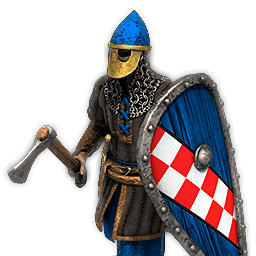
Sargento
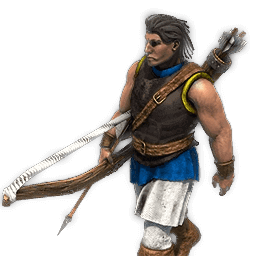
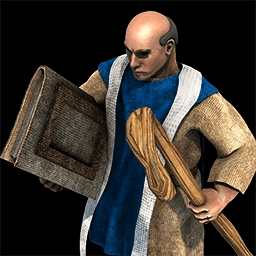
Sicilian unique infantry unit which can construct Donjons.
Coste


Combate
Entrega
Valores base antes de tecnologías y mejoras; en una partida avanzada suelen ser mayores.
Línea de evolución
- Sargentode los Castillos
- Sargento ÉliteImperial
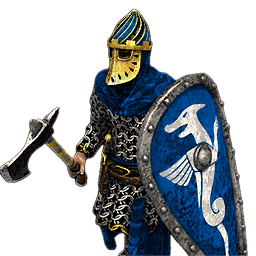
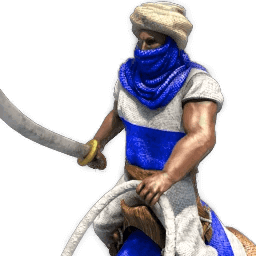
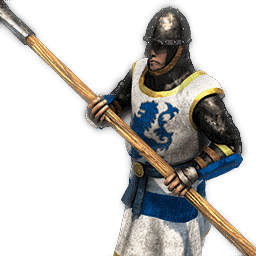
Sargento es fuerte contra
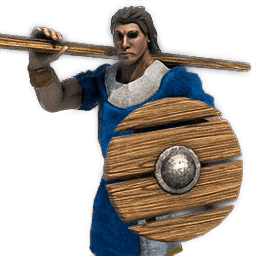
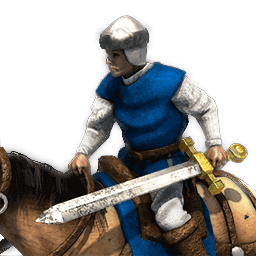
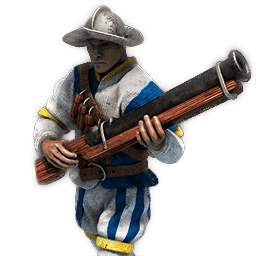
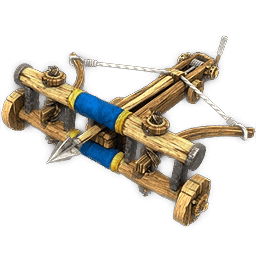
Sargento es débil contra

Conocimiento
Bonificaciones de ataque
Clases de armadura
Determina qué bonificaciones de ataque le afectan.
Civilizaciones
Unidad exclusiva de esta civilización.
Mejoras clave
Edad de los Castillos
- First Crusade
Up to 5 Town Centers spawn 5 Serjeants each
Edad Imperial
- Hauberk
Knights +1/+2 armor
- Blast Furnace
+2 Attack for infantry & cavalry
- Plate Mail Armor
+1/+2 Armor for infantry
Tácticas
Serjeants are a very peculiar infantry, as they are able to build (and repair) Donjons and can be trained in the Feudal Age, unlike any other unique unit. They can be seen as a variant of the Militia line with this peculiar quirk. Indeed, compared to a Man-at-Arms, a Serjeant in the Feudal Age has the same hit points, less attack and Line of Sight, and better melee and pierce armor. Still, Serjeants cost more than Men-at-Arms and need to be trained at a Donjon in the Feudal Age (which costs investment). Their ability to build Donjons enables Sicilians to perform a very peculiar strategy called Donjon Drop or Donjon Rush, and it can be done in the Feudal Age if the player has gathered stone beforehand (at least another for making a second Donjon). For performing this, the player must go with few Villagers near an opponent's settlement, create the first Donjon, and then start spawning Serjeants, which should also create more Donjons near the opponent, especially near their main Gold and Stone Mines and their main Lumber Camp. Also, Donjons can garrison 10 units, but the number of arrows remain the same until the Castle Age. With enough resources, a Donjon Drop can snowball quickly, as it does not need the assistance of villagers, unlike a Castle drop, except for the first Donjon, and although it will be faster if the player continues to use Villagers, it will also be riskier. Once the player reaches the Castle Age, Serjeants automatically gain +25 hit points (for a total of 75 hit points), +3 attack (for a total of 8), +1 melee and pierce armor (for a total 3/3 armor). Compared to a Long Swordsman, a Serjeant in the Castle Age is much more resilient against arrowfire and melee attacks, thanks to the extra armor. Still, its attack is a bit weaker than the Long Swordsman, and its attack bonuses are inferior to Long Swordsmen. However, its armor makes this unit more versatile than its Barracks counterpart, since it can be used to defend a location against different types of units (also, all Sicilian land military units have bonus damage resistance vs attack bonuses, so infantry counters are less effective). After the Castle Age, Serjeants must be the infantry of choice for Sicilians, unless the player has a shortage of stone for making Castles or Donjons. However, the Militia line of infantry is still a better counter against Eagle Warriors and buildings, so there are situations in which the player may focus more on the Militia line rather than Serjeants. The Elite Serjeants in the Imperial Age continue the trend of being a better armored infantry with less attack than the Militia line. Elite Serjeants' armor and movement speed sits on the middle ground between a Huskarl (which is highly specialized against arrowfire) and a Teutonic Knight (which is highly specialized against melee attack). The Sicilian unique technology First Crusade brings a muster of 5 Serjeants from each Town Center (maximum five Town Centers). This technology can still be researched even if the player has reached maximum population and is highly useful for an emergency if the player needs to defend but does not have enough troops. It can also be used to rapidly increase the player's army for a Serjeant raid against an opponent. First Crusade also makes Sicilian units more resistant to conversion, making Monks less effective as a counter to Serjeants. Serjeants fare much better than most infantry against their counters, due to their high melee and pierce armor, as well as the reduced bonus damage taken, but there are some units that can deal with Serjeants pretty well without problem. High-melee armor units, such as Teutonic Knights and Boyars can counter Serjeants pretty well. Jaguar Warriors and Samurai can be devastating due to their attack bonuses. Leitis and Dravidians' infantry (Especially the Urumi Swordsman) with Wootz Steel can also counter Serjeants, since their melee armor is useless against them. The Obuchs are in a similar situation. Since their attack removes armor, they will easily erase the advantage of the Serjeants cost-effectively and leave them prone to the attacks of other units. The Liao Dao is another threat to the Serjeant, as the Serjeant armor is useless against the bleeding damage from the Liao Dao's attacks, especially after Lamellar Armor. Despite having their bonus damage reduced, Cataphracts can still effectively deal with an army of Serjeants, due to the trample damage, and their bonus damage is still enormously high for Serjeants, and finally, Battle Elephants and War Elephants destroy them due to their very high hit points, attack and trample damage.
Consejos
- The Serjeant is a 'Mobile Fortress Engineer'. It carries heavy armor and can construct Donjons on the battlefield. Unique Feature: It takes 50% less bonus damage from counters (like Hand Cannoneers or Jaguar Warriors). It also auto-upgrades for free in the Castle Age. Use them to creep forward with towers or hold positions.aoecoach
- Weak to Knights & Heavy Melee. While they resist bonus damage, they lack the raw DPS to beat Knights in Castle Age or Teutonic Knights.aoecoach