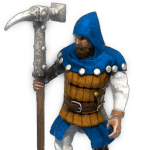
Obuch
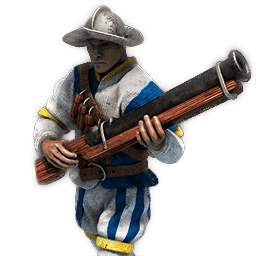
Polish unique infantry unit which can damage the armor of units it is fighting.
Coste


Combate
Entrega
Valores base antes de tecnologías y mejoras; en una partida avanzada suelen ser mayores.
Línea de evolución
- Obuchde los Castillos
- Obuch ÉliteImperial
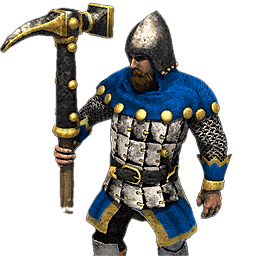
Obuch es fuerte contra
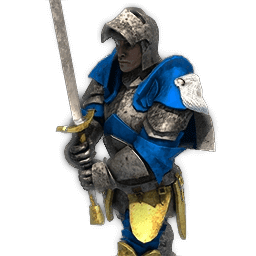
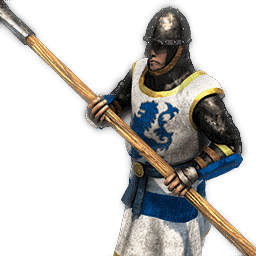
Obuch es débil contra

Conocimiento
Bonificaciones de ataque
Clases de armadura
Determina qué bonificaciones de ataque le afectan.
Civilizaciones
Unidad exclusiva de esta civilización.
Mejoras clave
Edad de los Castillos
- Szlachta Privileges
Knight-line costs -60% gold
Edad Imperial
- Lechitic Legacy
Scout-line deals trample damage
- Blast Furnace
+2 Attack for infantry & cavalry
- Plate Mail Armor
+1/+2 Armor for infantry
Tácticas
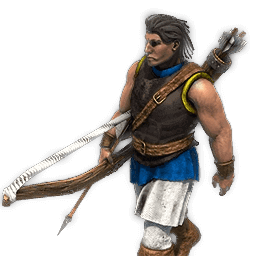
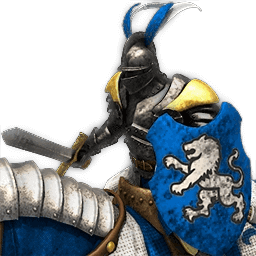
The Obuch is an infantry unit similar in functionality to the Militia line, but with key differences: the Obuch has 20 more hit points than the Long Swordsman, while the Elite Obuch has 25 more hit points than the Champion, and they have more armor than the Militia line, making the unit highly resilient. However, the Obuch, even in its Elite form, has less attack than a Two-Handed Swordsman, and less Line of Sight and speed. Despite having less attack, a fully upgraded Elite Obuch can defeat a fully upgraded Champion due to the durability of the Obuch, while the unit also tears the armor of the Champion with each attack. The Obuch having less attack but +1/+1 (+1/0 after Gambesons) armor compared to the Militia line (Castle Age onwards) equivalent is actually useful because infantry are supposed to be the frontline units, while fragile high-damage output units like Hand Cannoneers, Arbalesters, and siege can do the heavy lifting while being protected for longer. Additionally, it better allows them to utilize their special ability. Notable uses of its ability include weakening units with heavy melee armor (such as Teutonic Knights, Boyars, Serjeants, and Bulgarian Two-Handed Swordsmen with Bagains). In this role, the player should consider that Obuchs still lose against Teutonic Knights or Boyars in equal numbers, but not in equal resources spent. In the case of Serjeants or Bulgarian Two-Handed Swordsmen, Obuchs can be considered a hard counter just by themselves. It can also weaken units with strong pierce armor, such as Huskarls, War Wagons, and Elephants Archers. In this case, a Polish player may pair the Obuch with archers, as in a way, the Obuch may be played as a counter to anti-archer/anti-building units. The Obuch can mitigate the usefulness of enemy Blacksmith armor upgrades; however, researching armor against Obuchs still provides some value, unlike against the Leitis. Because Obuchs reduce the opponent's armor, other units with low attack (Elite Skirmishers and Winged Hussars with Lechitic Legacy in particular) might receive a huge increase in damage output. Just like the Vikings, the Poles should prefer combining their unique unit with Arbalesters and Siege Rams because both units cover each other's weaknesses very well, while being manageable to pull off because of top tier economy of both civilizations and low reliance on gold for the infantry units. === Counters === The Obuch shares typical infantry shortcomings: slow movement speed and no ranged attack, making them vulnerable to archers, ranged siege units, and units with attack bonuses against them (Cataphract, Jaguar Warrior and Samurai). Heavy Cavalry Archers, Plumed Archers, Conquistadors, and Mamelukes can be particularly deadly against Obuchs, possessing superior speed and range to kite effectively. Throwing Axemen and Gbetos are also effective, and Battle Elephants and War Elephants due to high hit points and the Poles' lack of Halberdiers. Berserks are a soft counter to Obuchs, since they are fast and can automatically regenerate hit points (and lost armor at full hit points) after an engagement. Against Berserks, a Polish player may prefer investing into the Knight line instead. Urumi Swordsmen with Wootz Steel become a big counter because the charge attack with splash damage that ignores armor overwhelms the Obuch's high hit points and armor, despite costing more. Legionaries have bonus damage against infantry that can become a huge threat as well, especially with a nearby Centurion boosting their attack speed, and after gaining a charge attack with Comitatenses, as well being by far the easier unit to mass. The Liao Dao is also a major threat, as its attacks cause bleeding damage that ignore armor, outscaling the Obuch in massed battles. They can also reflect some damage taken with Lamellar Armor. Monks can also be a problem for Obuchs. Not only is a Monk likely to convert an Obuch one-on-one (a Monk with Sanctity requires at least 4 hits for the Obuch to kill it), but the Monk can also undo the Obuch's armor reduction if it heals a unit back to full health. Monks are also unaffected by the Obuch's armor reduction effect, since they have no armor to begin with (except for Bengalis). Most crucially, the Poles lack Heresy, and the Obuch moves much slower than most infantry, making it prone to conversion. However, the Poles' Winged Hussars will make short work of Monks.
Consejos
- The Obuch is a 'Reverse Blacksmith'. Instead of adding armor, it strips it away permanently. Each hit removes 1 Melee and 1 Pierce armor from the target. This effect stacks until armor reaches zero. Use them to soften up Paladins for your Arbalesters or to grind down enemy Champions. They are cheap and train fast, so mass them up!aoecoach
- Weak to Hand Cannoneers. Their high armor doesn't help against Gunpowder, and they lack the speed to close the gap quickly. Archers can also kite them effectively.aoecoach